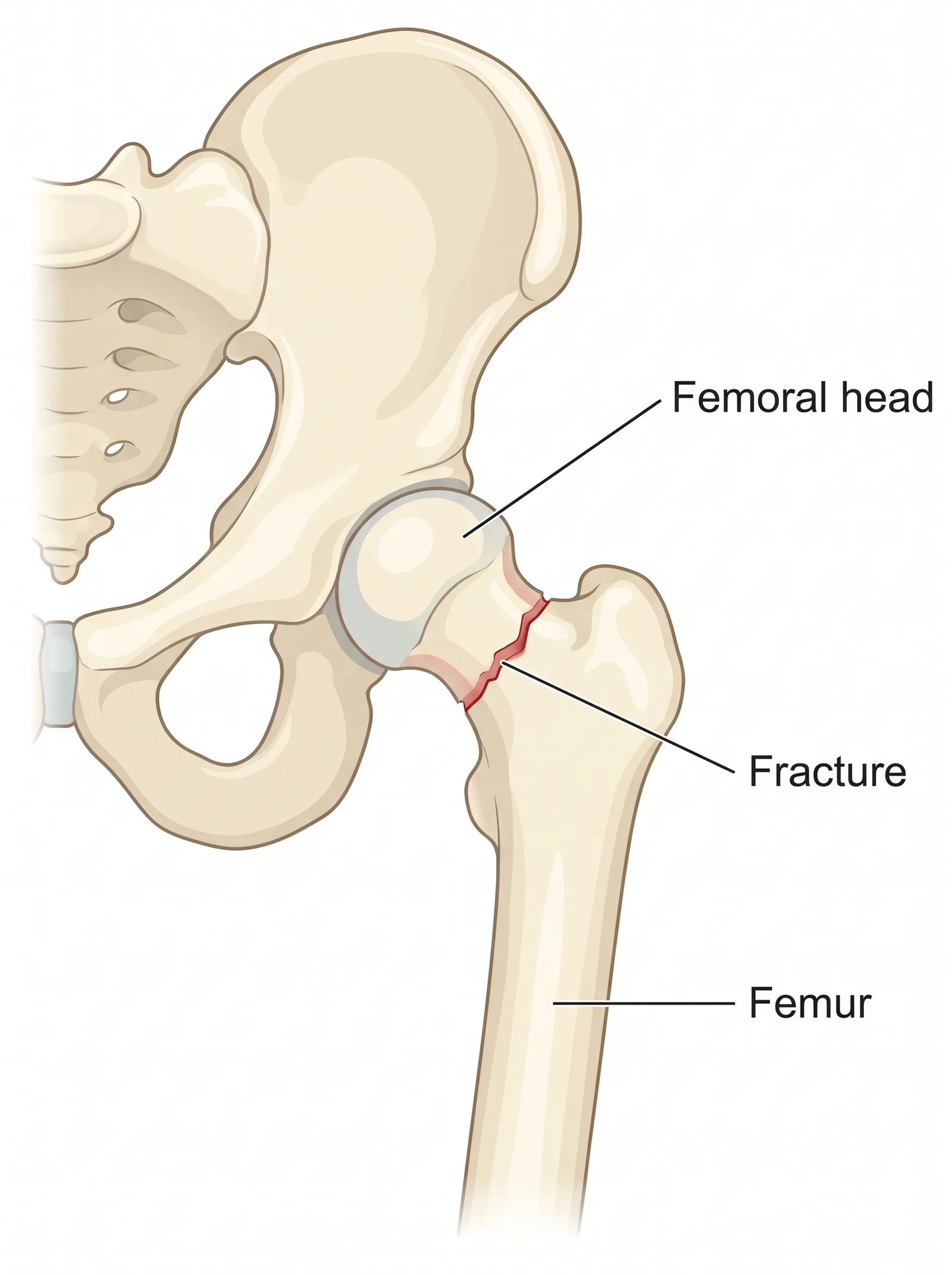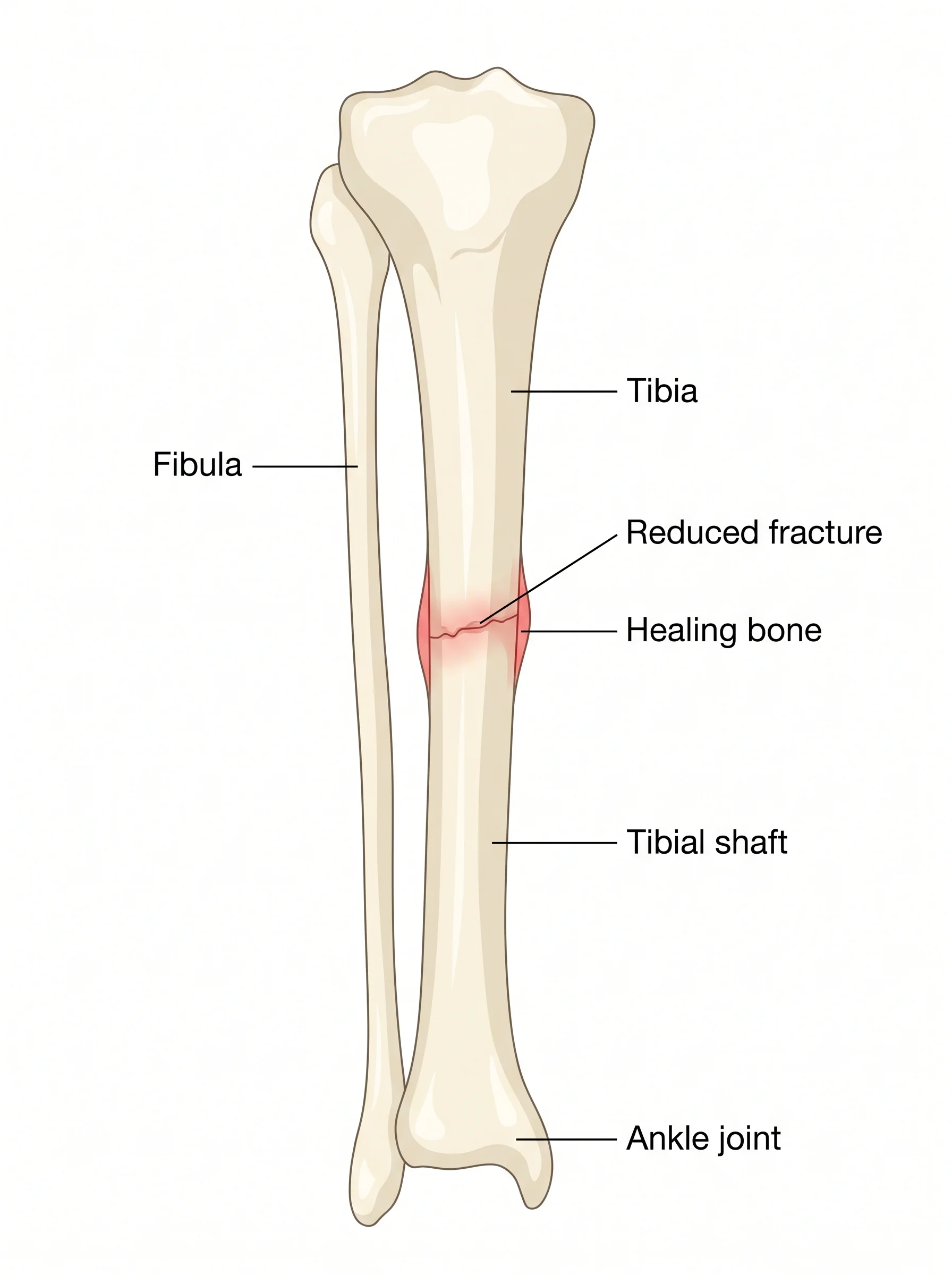
ORIF stands for open reduction and internal fixation. It is a surgery to repair a broken bone. The surgeon opens the area, moves the pieces back into position, and holds them with hardware such as plates and screws. It is used when a fracture cannot heal well on its own.
Miachel Suk performs fracture repair (orif) in Danville when it is the right step, and reviews every alternative with you first.
What do patients ask most?
What do patients ask about Fracture Repair (ORIF)?+
What is Fracture Repair (ORIF)?
ORIF stands for open reduction and internal fixation.
It is a common surgery to repair a broken bone that cannot heal well in the right position on its own. Breaking the name into parts makes it clear.
- Open means the surgeon makes an incision to see and reach the broken bone directly, rather than treating it from outside the skin. - Reduction means putting the broken pieces back into their correct position and alignment. - Internal fixation means holding those pieces in place with hardware inside the body, such as metal plates, screws, rods, or pins.
Put together, ORIF is a way to line up a broken bone precisely and hold it steady so it can heal. The hardware acts like an internal cast, keeping the pieces where they belong while your body knits new bone across the break.
An orthopedic surgeon (a doctor who treats bones, joints, and the tissues around them) performs ORIF. Not every fracture needs it. Many breaks heal with a cast or brace, which we cover on our fracture care pages. ORIF is chosen when a fracture cannot hold good alignment without surgery, when the ends are far out of place, when the break reaches into a joint surface, when the bone is in many pieces, or when the break is open, meaning the skin was pierced.
The goal of ORIF is a bone that heals in good alignment, so the limb works well and feels comfortable. The hardware often stays in the body for life and causes no problems. In some cases it is removed later, usually only if it causes discomfort. This page walks through the procedure in sequence, what recovery involves, and how to prepare, so you can go into surgery with a clear picture of what to expect.
What are the symptoms of Fracture Repair (ORIF), and when should you see a specialist?
You do not choose ORIF by symptoms.
It is a treatment your surgeon considers based on the fracture. Still, it helps to understand the signs of a fracture serious enough that surgery may be part of the conversation.
Signs that a break may be significant include:
- Severe pain with any movement or weight. - A limb that looks bent, crooked, or clearly out of shape. - Marked swelling and bruising soon after the injury. - Being unable to use or bear weight on the limb at all. - Bone visible through the skin, or a deep wound over the break. This is an open fracture and is an emergency.
If you have a serious injury like these, seek care right away, in the emergency room for severe or open fractures. The team will diagnose the break and decide whether surgery is needed.
A specialist typically considers ORIF when:
- The broken ends are displaced, meaning shifted well out of line, and cannot be held in place by a cast alone. - The fracture reaches into a joint surface, where even small steps in the bone can affect how the joint moves and wears. - The bone is broken into several pieces, which are hard to align without surgery. - The fracture is open, which needs surgical cleaning as well as repair. - A first attempt to set the bone without surgery did not hold, or the position slipped.
Your surgeon will explain exactly why ORIF fits your break, what the alternative would be, and what to expect. You should feel free to ask why surgery is recommended over non-surgical care, and what each path would mean for your healing. A clear understanding of your own fracture is the starting point.
How is Fracture Repair (ORIF) diagnosed, and what does the visit involve?
Before ORIF, your surgeon builds a detailed picture of the fracture and of you, so the surgery is planned carefully.
It starts with your history and exam. The surgeon asks how the injury happened, since the force involved shapes the break. They examine the limb, checking the skin, swelling, and, importantly, the nerves and blood flow beyond the injury, making sure fingers or toes are warm and have feeling. Protecting these soft tissues is part of the plan.
Imaging guides the surgery:
- X-rays show the fracture pattern and how far the pieces have shifted. - A CT scan (a detailed set of X-ray images that build a cross-section view) is often used for complex breaks, especially those that reach a joint, so the surgeon can plan where to place hardware.
You will also have a pre-operative health review. This may include blood tests, a review of your heart and lung health, and a look at your medicines, since some, such as blood thinners, may need adjusting before surgery. The surgeon and anesthesia team (the clinicians who keep you comfortable and safe during surgery) will ask about past surgeries, allergies, and reactions to anesthesia.
This is the time to discuss the plan in full. Your surgeon should explain the type of hardware likely to be used, the kind of anesthesia planned, how long recovery may take, and the risks and benefits. Ask questions freely: Why is surgery the best option for my break? What hardware will be used? Will it stay in? What are the risks? What does recovery look like? Leaving this visit with clear answers helps you prepare with confidence.
If you have questions about coverage or costs for the surgery, our office staff will walk you through what your insurance covers. Ask them directly.
When is Fracture Repair (ORIF) the right treatment?
ORIF is a surgical treatment, and good care always weighs it against non-surgical options first.
Understanding that comparison helps you see why surgery is recommended for your break.
Non-surgical care is the first choice whenever a fracture can heal well without it. This includes casts, splints, braces, and, when the ends have shifted a little, a closed reduction, in which the surgeon guides the bone back into line without an incision and then holds it with a cast. Many fractures heal beautifully this way. If your break could heal well in a cast, that is the path your surgeon would choose.
ORIF becomes the better option when non-surgical care cannot give the bone a fair chance to heal in good position. This is the case when:
- The pieces are too far out of line to hold with a cast. - The break involves a joint surface and needs precise alignment to keep the joint smooth. - The bone is in several pieces that will not stay aligned on their own. - The fracture is open and needs surgical cleaning. - A cast was tried and the position slipped.
There are also related surgical approaches your surgeon may mention. External fixation uses a frame outside the skin, connected to the bone by pins, and is sometimes used temporarily when swelling or wounds make immediate internal fixation unwise. Some fractures are fixed with a rod placed down the center of the bone. Your surgeon chooses the method that best fits your break.
The point is that surgery is not the default. It is recommended when it offers the bone the best chance to heal soundly. Your surgeon will explain why ORIF, rather than a cast or another method, fits your fracture, so the decision makes sense to you.
What happens during Fracture Repair (ORIF), step by step?
Knowing what happens step by step can ease worry.
Here is the usual sequence for ORIF. Details vary by the bone and the break, and your surgeon will tell you what is specific to your case.
First, preparation and anesthesia. On the day of surgery, you check in and meet your team. The anesthesia team gives you anesthesia so you feel no pain. This may be general anesthesia, which puts you fully to sleep, or a regional block that numbs the area, sometimes with medicine to keep you relaxed. The limb is cleaned carefully to lower infection risk.
Second, the incision, the "open" step. The surgeon makes an incision over the fracture, sized to reach the broken bone while protecting nearby nerves, blood vessels, and muscle. For an open fracture, the surgeon also cleans the wound thoroughly to remove any contamination.
Third, the reduction. The surgeon moves the broken pieces back into their correct position and alignment, checking the position directly and often with a live X-ray in the operating room. Precise alignment is the heart of the surgery, especially when the break reaches a joint.
Fourth, the fixation. The surgeon holds the pieces in place with hardware suited to the bone and break. This may be a metal plate laid along the bone and secured with screws, screws alone across the break, a rod down the center of a long bone, or pins and wires for smaller pieces. The hardware is usually made of titanium or stainless steel and is designed to stay in the body.
Fifth, checking and closing. The surgeon confirms alignment and stability, often with X-ray images, then closes the incision with sutures or staples and applies a dressing. A splint or brace may be placed to protect the repair while early healing begins.
After surgery, you go to a recovery area where the team watches you as the anesthesia wears off. Some ORIF procedures allow you to go home the same day, while others involve a short hospital stay, depending on the bone, the surgery, and your health. Your surgeon will tell you which to expect and give you clear instructions for the days ahead.
What is the recovery timeline for Fracture Repair (ORIF)?
Recovery after ORIF follows the pace of bone healing, so the best way to track it is by what you can do, not only by the date.
The ranges below come from general guidance from the American Academy of Orthopaedic Surgeons (AAOS). These are ranges, not promises. Your bone, your surgery, and your health shape your path.
Early stage, roughly the first two weeks. The goal is to protect the repair, control pain and swelling, and care for the incision. You are recovering well when swelling and pain ease day by day, when the incision stays clean and dry, and when you can keep the limb elevated and supported as directed. Fingers or toes beyond the surgery should stay warm with good feeling. Many people move nearby joints gently during this time to prevent stiffness, as advised.
Middle stage, roughly weeks two to six. The goal is early bone healing and restoring motion. You are progressing when the incision has healed and sutures or staples are out, when pain with gentle movement is mild, and when your surgeon clears you to begin more motion or light weight, often with physical therapy (guided exercises to rebuild motion and strength). X-rays begin to show bone forming across the break.
Later stage, roughly six weeks to three or four months. The goal is solid healing and return to activity. You are ready to advance when X-rays show the fracture healing firmly, when you can bear weight or use the limb with growing comfort, and when strength and motion are returning through therapy. Many people return to light daily activities and, in time, to work, guided by the demands of their job.
Full recovery. Many people regain good function within a few months, per general AAOS guidance, though bone continues to strengthen and remodel for up to a year or more. These are ranges, not promises. Complex fractures, breaks into joints, and open fractures usually take longer than simpler repairs.
Milestones that show real progress include walking without a limp for leg surgery, gripping and lifting for arm surgery, a well-healed incision, sleeping without pain medicine, and returning to work and activities as cleared. Reaching each on your own timeline is the aim, not matching a fixed calendar. The hardware itself typically stays in place and needs no attention once healing is done.
Read the full guide to preparing for surgery →
Your own recovery instructions come from the office and are specific to you. This page describes the general course, not a plan to follow.
How should you prepare for Fracture Repair (ORIF)?
Good preparation before ORIF makes surgery and recovery smoother.
Planning ahead in these areas helps.
Home setup. Prepare your home before surgery, since moving around will be harder at first. Set up a comfortable spot on one level where you can rest with the limb elevated. For a leg repair, clear a path free of loose rugs and clutter to lower the risk of tripping, and keep everyday items within easy reach. A raised toilet seat or shower chair can help. Stock easy meals and any supplies you will need.
Transportation. Arrange a ride to and from surgery, since you cannot drive yourself home after anesthesia. Plan rides for early follow-up visits too, especially if your driving arm or right leg is affected or you are taking pain medicine.
Time off. Talk with your surgeon about how much time you will need away from work, based on your job and the fracture. Desk work often allows an earlier return than physical work. Arrange your time off and any help with duties at home in advance.
Who to have available. Plan for someone to stay with you for at least the first day or two after surgery, and longer if you have a leg repair and need help getting around. Having a family member or friend on hand for meals, errands, and support makes the early days much easier.
Before surgery, follow your team's instructions carefully. You will likely be told not to eat or drink for a set number of hours beforehand. Your surgeon will tell you which medicines to stop or continue, especially blood thinners. If you smoke, stopping before surgery helps healing, since smoking slows bone repair. Prepare your questions and bring your list of medicines and allergies.
If you have questions about what your insurance covers for the surgery, hospital, or therapy, our office staff can help you understand your coverage. Just ask.
Which warning signs should you call about?
Most people recover from ORIF without trouble, but a few problems need prompt attention.
Knowing the signs helps you act early.
Call the office right away, or seek care, if you notice:
- Increasing redness, warmth, swelling, or drainage around the incision, or a wound that opens. These can signal infection. - Fever or chills after surgery. - Pain that keeps getting worse instead of better, or pain not helped by your prescribed medicine. - Numbness, tingling, or a cold, pale, or bluish look in the fingers or toes beyond the surgery. - A dressing, splint, or cast that feels far too tight, or swelling that keeps growing.
Seek emergency care at once for:
- Chest pain or trouble breathing. - Swelling, warmth, and pain in the calf or thigh, which can be signs of a blood clot in the leg. - Severe, unrelenting pain in a muscle that feels tight and hard, especially with numbness.
These more serious signs are uncommon, but they are worth knowing so you can act quickly. A blood clot after surgery, though not common, is one reason your team may advise gentle movement and, in some cases, a blood thinner.
The rule is simple: rising pain, signs of infection, numbness, or trouble breathing are never something to wait out. Call. Keep your surgeon's number where you can find it, and know where the nearest emergency room is. For routine questions, such as how to care for the incision or when your next visit is, the office is glad to help during regular hours. No question is too small.
What results can you expect from Fracture Repair (ORIF)?
ORIF is a well-established surgery, and most people heal well and regain good use of the limb.
The findings below reflect general guidance from the American Academy of Orthopaedic Surgeons (AAOS) and are general ranges, not promises about any one person.
A few points help set fair expectations:
- Most fractures repaired with ORIF heal in good alignment, according to general AAOS guidance, giving the limb a sound foundation to work from. These are ranges, not promises. - The hardware usually stays in place for life without causing problems. In a minority of cases it is removed later, most often because it causes discomfort, per general AAOS guidance. - As with any surgery, there are risks. These include infection, problems with wound healing, blood clots, nerve or blood vessel injury, and, less often, a fracture that heals slowly (delayed union) or does not heal (nonunion), per general AAOS guidance. Your surgeon takes steps to lower these risks and will discuss the ones that apply to your case. - Fractures that reach a joint surface carry some added risk of stiffness or, over the long term, arthritis (wear of the joint surface), per general AAOS guidance. Precise alignment during ORIF is aimed at lowering that risk.
Your own outcome depends on the fracture, your health, and how you and your surgeon work through recovery together. Following the plan for weight-bearing, wound care, and therapy has a real effect, as do steady habits like good nutrition and, if it applies, not smoking during healing. We will track your progress with exams and X-rays and adjust the plan as your bone heals. The aim is a bone that heals soundly and a limb that works and feels the way you need it to.
Fellowship trained at Hospital for Special Surgery Trauma Fellowship. Sees patients in Danville.
About Miachel Suk →